
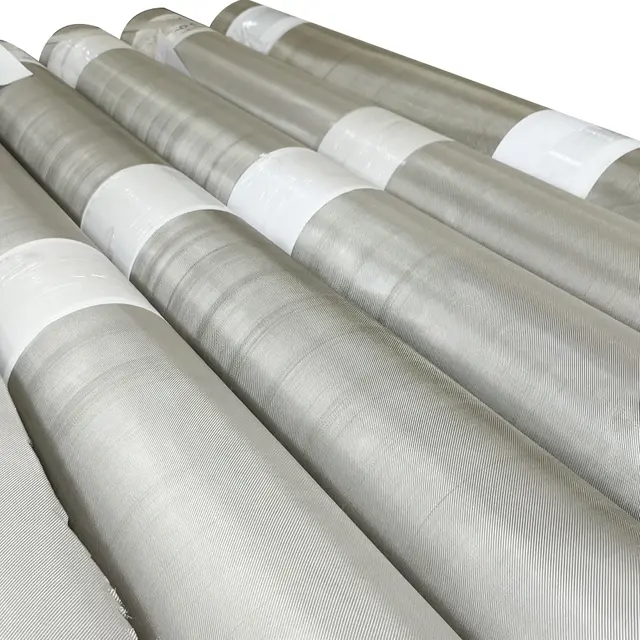
With continuous improvements in the properties of high‑temperature alloys, their scope of application keeps expanding. Notably, remarkable progress has been made in the application of heat‑ and corrosion‑resistant alloys in power generation, machinery manufacturing, petrochemical and other industries. Their utilization has also extended to glass manufacturing, medical devices and other fields. The market demand for civilian‑use high‑temperature alloys remains robust, promising broad market prospects.
In the power sector, the development of coal‑fired power and nuclear power relies heavily on high‑temperature structural materials. For coal‑fired power plants, components such as ultra‑high‑pressure steam‑parameter units, superheaters and reheaters impose stringent requirements on material performance including high‑temperature resistance, pressure resistance and creep resistance. High‑temperature alloys serve as the critical materials for these components. At present, GH2948 iron‑based superalloy is the primary tube material for superheaters in main boilers of China’s thermal power units.
In machinery manufacturing, major applications lie in automobile production and diesel engines. Components for automotive turbochargers, engine exhaust pipes, internal‑combustion engine valve seats, inserts, intake valves, sealing springs, spark plugs, bolts, heat generators and other assemblies require superior high‑temperature mechanical properties, making them key application scenarios for high‑temperature alloys. Among these fields, automotive turbochargers represent the largest civilian application of high‑temperature alloys for vehicles. Currently, domestically‑developed cast superalloys including K213, K418, K419 and K4002 are widely adopted for turbocharger wheels in China.
Petrochemical industrial equipment operates under harsh service conditions. Iron‑based and nickel‑based alloys are extensively used for pressure vessels, pipelines, pipe fittings, valves and other parts, with widely‑adopted grades such as IN718 and GH2747.