
Alloy 690 features excellent resistance to intergranular corrosion and intergranular stress‑corrosion cracking, and is primarily used as heat‑transfer tube material for steam generators in pressurized‑water‑reactor (PWR) nuclear power plants. Materials for steam‑generator heat‑transfer tubes of PWRs have gone through evolutionary development, including 304 austenitic stainless steel, Alloy 600, Alloy 800 and Alloy 690. Studies on in‑service corrosion failures of Alloy 600 indicate that intergranular corrosion and intergranular stress‑corrosion cracking constitute its major failure modesNuclear Re…. Since being put into service in the 1990s, Alloy 690 applied for PWR steam‑generator heat‑transfer tubes has had no reported service‑related damage cases.
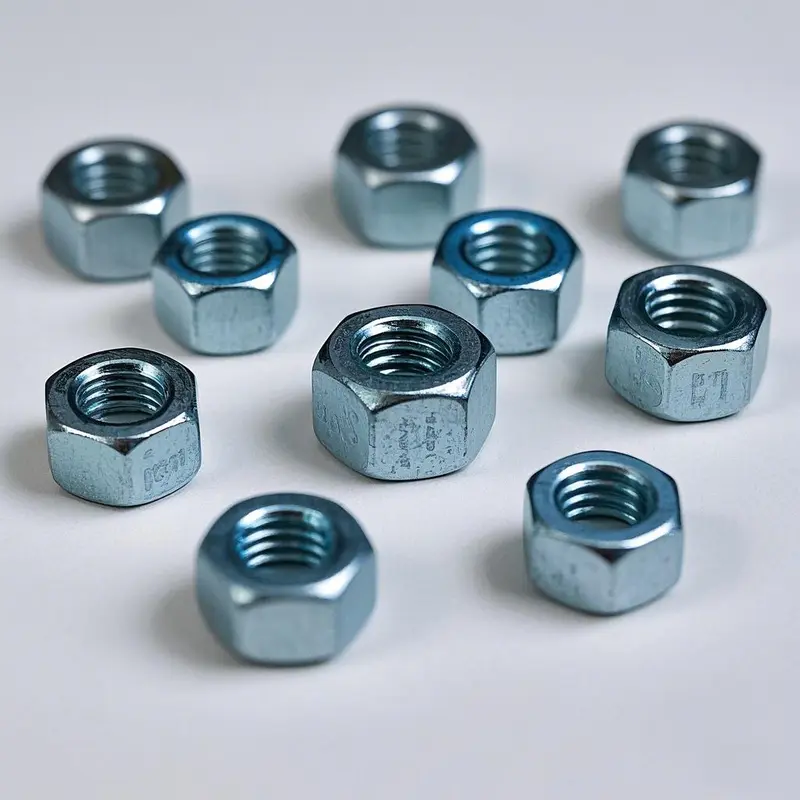
Inconel 690 Nuts (UNS N06690 / NiCr30Fe / NS3105)
| Chemical Composition | Carbon (C): ≦0.050% | Chromium (Cr): 27%~37% |
| Nickel (Ni): Balance | Iron (Fe): 7%~11% | |
| Manganese (Mn): ≦0.50% | Silicon (Si): ≦0.50% | |
| Ni: 41-42.5% | Sulfur (S): ≦0.015% | |
| Copper (Cu): ≦0.5% | ||
| Physical Properties | Density: 8.19 g/cm³ Melting Point: Approx. 1320°C Thermal Expansion Coefficient: 12.3×10⁻⁶/°C Thermal Conductivity: 11.1 W/(m·K) Electrical Resistivity: 1.03×10⁻⁶ Ω·m |
|
| Application Areas | Inconel 690 has a wide range of applications, primarily in petroleum, chemical, power, aerospace, and marine engineering industries. In the petroleum and chemical sectors, it is widely used to manufacture pipes, valves, reactors, heat exchangers, and storage tanks. In the power industry, it is mainly used for high-temperature steam boilers and flue gas desulfurization equipment. In aerospace and marine engineering, it is used for high-temperature and corrosion-resistant components. | |
Inconel 690 (UNS N06690) nuts are high-performance fasteners manufactured from nickel-based superalloy Inconel 690, specifically designed for extreme high-temperature, high-pressure, and corrosive environments. Its high chromium content (27-31%) and nickel-based structure provide excellent resistance to corrosion, oxidation, and stress corrosion cracking, making it widely used in nuclear, chemical, and energy industries.
Parameters:
- Category: Hexagon Nut
- Product Grade: Class A
- Strength Grade: Grade 8
- Across Flats Width: 8-120
- Height: 5.6-60 (mm)
- Thread Specification: M5-M100
- Surface Treatment: Untreated
1. Material Characteristics
- Chemical Composition (Typical Values):
- Nickel (Ni) ≥58%, Chromium (Cr) 27-31%, Iron (Fe) Balance, Carbon (C) ≤0.05%, Molybdenum (Mo) ≤0.5%, Aluminum (Al) ≤0.5%, Titanium (Ti) ≤0.5%.
- Strengthening Mechanism: Solid-solution strengthening. High chromium forms a dense Cr₂O₃ oxide film, enhancing oxidation and corrosion resistance.
- High-Temperature Resistance: Operating temperature up to 1000°C, with short-term tolerance up to 1200°C, maintaining high strength and creep resistance at elevated temperatures.
2. Core Advantages
- Corrosion Resistance
- Resistant to oxidizing acids (nitric acid, sulfuric acid), chlorides, seawater, and sulfur-containing environments. Particularly resistant to stress corrosion cracking (SCC), making it suitable for primary and secondary circuits in nuclear reactors.
- High-Temperature Stability
- Maintains high tensile strength (≥586 MPa) and fatigue resistance above 700°C, suitable for long-term high-temperature load-bearing applications.
- Machinability and Weldability
- Can be formed via hot forging and hot rolling. TIG or MIG welding is recommended using ENiCrMo-3 filler wire, with no post-weld heat treatment required.
3. Application Areas
- Nuclear Industry: Heat transfer tube nuts for pressurized water reactor steam generators, core support structure connectors.
- Chemical Industry: Nitric acid production equipment, nuclear fuel reprocessing plants, high-temperature reactor flange nuts.
- Energy & Environmental Protection: Flue gas desulfurization components for coal-fired power plants, radioactive waste treatment equipment.
- Marine Engineering: Seawater desalination equipment, deep-sea oil platform nuts.
4. Standards and Certifications
- International Standards:
- ASTM B446 (Bars), ASTM F467 (Nuts), ISO 4032 (Hexagon Nuts), DIN 934 (German Standard Nuts).
- Certifications:
- PED Certification (Pressure Equipment Directive), EN 10204 3.1/3.2 Material Certificates, complies with NACE MR0175 sulfide stress cracking resistance standard.
5. Manufacturing Process
- Raw Materials: Vacuum Induction Melting (VIM) + Electroslag Remelting (ESR) process to ensure high purity and uniformity.
- Forming Methods:
- Hot Forging: Heated to 1050-1150°C to avoid grain coarsening.
- Cold Working: Solution treatment (1095-1120°C) is required after cold drawing or rolling to restore plasticity.
- Surface Treatment: Options include zinc plating, nickel plating, PTFE coating, etc., to enhance corrosion and galling resistance.
6. Typical Mechanical Properties (Room Temperature)
| Performance Indicator | Typical Value |
|---|---|
| Tensile Strength | ≥586 MPa |
| Yield Strength (0.2%) | ≥240 MPa |
| Elongation | ≥30% |
| Hardness (HB) | 160-210 |
7. Global Grade Equivalents
| Country / Region | Standard | Grade |
|---|---|---|
| USA | UNS | N06690 |
| Europe | EN/DIN | NiCr30Fe / 2.4642 |
| China | GB/T 15007 | NS3105 |
| Japan | JIS | NCF690 |
8. Precautions
- Hot Working Control: Avoid dwelling in the sensitive temperature range of 900-1000°C to prevent grain coarsening.
- Environmental Adaptability: Avoid contact with molten metals (e.g., lead, zinc) to prevent hot brittleness.
- Installation Torque: Preload force must be precisely controlled to avoid stress concentration leading to cracking.