
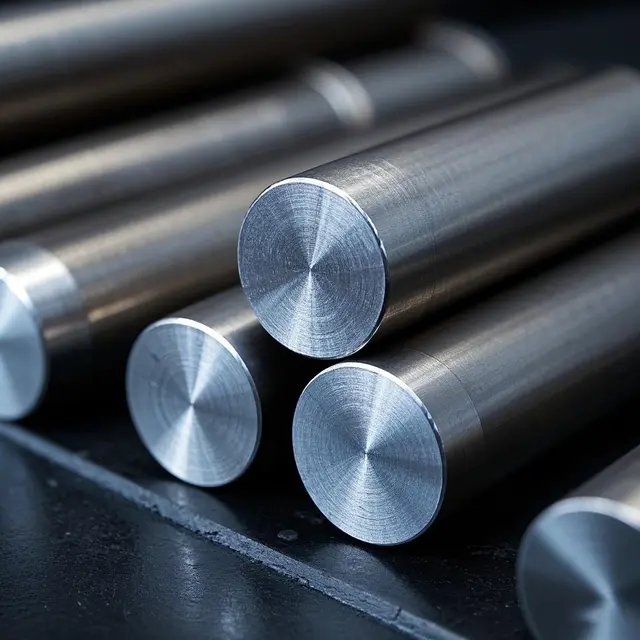
Inconel 625 Bars (N06625 / W.Nr. 2.4856 / NS 3306 / NiCr22Mo9Nb / B446 / AMS5599): Precipitation-Hardenable Alloy with Enhanced Mechanical Properties in Severe Environments
Inconel 625 Bars (N06625 / W.Nr. 2.4856 / NS 3306 / NiCr22Mo9Nb / B446 / AMS5599) are high-performance nickel-chromium-molybdenum alloys renowned for their outstanding fatigue and thermal fatigue strength, excellent weldability, and exceptional resistance to various severe environments, including high temperatures, corrosion, and oxidation. They are commonly used in demanding applications that require both high strength and resistance to extreme conditions.
Inconel 625 is a nickel-based superalloy famous for its superior resistance to high-temperature oxidation, corrosion, and fatigue. The addition of molybdenum and niobium enhances its strength and resistance to corrosive chemical environments. Inconel 625 boasts excellent high-temperature performance and resistance to pitting and crevice corrosion, making it widely used in aerospace, marine, chemical processing, power generation, and nuclear industries. It is also highly regarded for its weldability and ease of fabrication, making it a versatile material for many critical applications.
| Inconel 625 (NS3306 / UNS N06625) | ||
| Chemical Composition (%) | Ni: 58 | Cr: 20-23 |
| Mo: 8.0-10 | Fe ≤ 5 | |
| Nb+Ta: 3.15-4.15 | C ≤ 0.10 | |
| Si ≤ 0.5 | Mn ≤ 0.5 | |
| Ti ≤ 0.4 | ||
| Melting Point (℃) | 1290-1350 | |
| Density (g/cm³) | 8.4 | |
| Applicable Standards | ASTM: B443 | AMS: 5599 |
| Application Areas | Trays and fixtures for heat treatment plants, high-speed gas burners, wire mesh belts in industrial furnaces, exhaust system components, combustion chambers for solid waste incinerators, and oxygen reheaters. | |
Core Characteristics
-
Corrosion Resistance
- General Corrosion Resistance: Excellent resistance to seawater, chlorides, sulfuric acid, nitric acid, and other media, making it especially suitable for marine environments and chemical equipment.
- Stress Corrosion Cracking Resistance: Outstanding performance in high-temperature, high-pressure chloride-containing environments, superior to ordinary stainless steels.
- Oxidation Resistance: Forms a dense oxide film below 980°C, providing long-term oxidation resistance.
-
High-Temperature Strength
- Operating Temperature: -253°C to 980°C, with short-term tolerance up to 1090°C.
- Creep Strength: Tensile strength ≥ 760 MPa and yield strength ≥ 345 MPa at 700°C.
-
Machinability and Weldability
- Hot and Cold Working: Can be formed via hot forging and cold drawing; heating temperature must be controlled (typically 1150-1230°C).
- Weldability: Suitable for TIG, MIG, and electron beam welding, with no post-weld heat treatment required.
-
Microstructure
- Solid-solution-strengthened alloy with no precipitation-hardening phases, ensuring excellent long-term high-temperature stability and no risk of aging embrittlement.
Typical Mechanical Properties
| Performance Indicator | Room Temperature Value | High-Temperature Value (700°C) |
|---|---|---|
| Tensile Strength | ≥ 760 MPa | ≥ 760 MPa |
| Yield Strength (0.2%) | ≥ 345 MPa | ≥ 345 MPa |
| Elongation | ≥ 30% | ≥ 25% |
| Hardness (HB) | 160-210 | – |
Application Areas
- Marine Engineering
- Seawater desalination equipment, deep-sea oil platform riser bolts, and subsea valve components.
- Aerospace
- Jet engine combustion chamber components, turbine blade fasteners, and rocket thruster parts.
- Chemical & Energy
- High-temperature reactors, nuclear waste disposal containers, and geothermal well piping.
- Industrial Equipment
- High-temperature furnace heating elements and high-pressure steam pipeline flange bolts.
Processing and Usage Precautions
- Hot Working
- Heat to 1150-1230°C and avoid dwelling in the sensitive temperature range of 900-1000°C to prevent grain coarsening.
- Cold Working
- Solution treatment (1095-1120°C) is required after cold deformation to restore plasticity.
- Welding Recommendations
- Use Inconel 625 or ENiCrMo-3 filler wire; preheat thick sections to 150-200°C before welding.
- Surface Treatment
- Polishing, sandblasting, or chemical treatments can be applied to enhance corrosion resistance.
Standards and Certifications
- ASTM B446: Standard specification for nickel-based alloy bars.
- AMS 5666: Aerospace specification for Inconel 625 bars.
- Nuclear Certification: Complies with ASME BPVC Section III (Nuclear Power Plant Components) requirements.
Comparative Advantages
| Material | Advantages | Limitations |
|---|---|---|
| Inconel 625 | Balanced corrosion resistance and high-temperature strength; no aging embrittlement | Higher cost; significant cold working hardening |
| Inconel 718 | Higher high-temperature strength (≤ 700°C) | Difficult to machine after aging treatment |
| Hastelloy C-276 | Superior resistance to reducing acid corrosion | Lower high-temperature strength |
Maintenance and Service Life
- Regular Inspection: Surface corrosion must be inspected after use in sulfur-containing or acidic environments.
- Cleaning and Maintenance: Avoid accumulation of surface contaminants; clean with neutral detergents.
- Alternative Options: If cost is a concern and corrosiveness is relatively low, Incoloy 825 can be considered.