
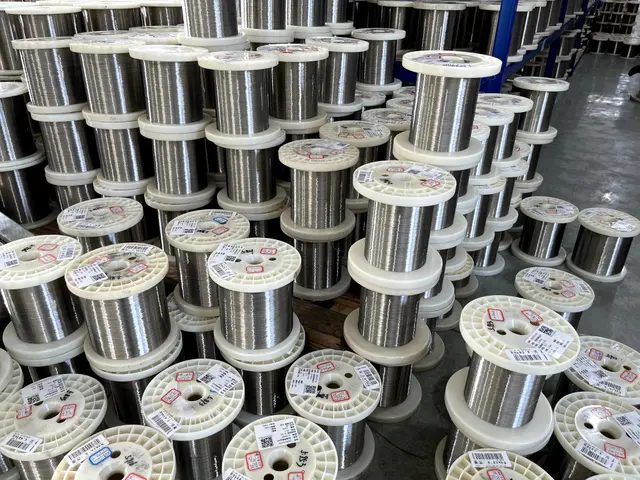
Inconel 617 Wire (UNS N06617 / NiCr22Co12Mo9 / NS3106 / 2.4663) is a nickel-based solid-solution-strengthened alloy. With excellent high-temperature resistance, oxidation resistance, and corrosion resistance, it serves as a critical material in extreme environments.
| Inconel 617 (UNS N06617) | ||
| Chemical Composition (%) | Ni ≥ 44.5 | Cr: 20.0-24.0 |
| Mo: 8.0-10 | Fe ≤ 3.0 | |
| Mn ≤ 1.0 | C: 0.05-0.15 | |
| Si ≤ 1.0 | Al: 0.8-1.5 | |
| Ti ≤ 0.6 | Co: 10.0-15.0 | |
| Melting Point (℃) | 1330-1380 | |
| Density (g/cm³) | 8.4 | |
| Application Areas | Inconel 617 is regarded as a premier material for offshore oil and gas extraction equipment, such as offshore pipelines. Using Inconel 617 in high-speed rotating components like aero-engines and gas turbines significantly enhances fatigue resistance and high-temperature performance, ensuring long-term stable operation. | |
Below is the core information:
1. Chemical Composition
The typical chemical composition of Inconel 617 is (%):
- Nickel (Ni): ≥ 44.5
- Chromium (Cr): 20-24
- Cobalt (Co): 10-15
- Molybdenum (Mo): 8-10
- Aluminum (Al): 0.8-1.5
- Iron (Fe): ≤ 3.0
- Titanium (Ti): ≤ 0.6
- Carbon (C): 0.05-0.15
- Others: Trace elements such as silicon, manganese, sulfur, etc.
Role of Key Elements:
- Chromium: Enhances resistance to oxidation and sulfide corrosion.
- Aluminum: Forms a dense oxide film (Al₂O₃), improving high-temperature oxidation resistance.
- Cobalt and Molybdenum: Improve high-temperature strength through solid-solution strengthening.
2. Core Properties
-
High-Temperature Resistance
- Operating Temperature: -196°C to 1100°C, with short-term tolerance up to 1150°C.
- High-Temperature Strength: Maintains approximately 80% of room temperature tensile strength (approx. 800 MPa) at 600°C, with excellent creep resistance.
-
Corrosion Resistance
- Oxidation Resistance: Rapidly forms a protective oxide film at high temperatures, resisting oxidation and carburization.
- Medium Corrosion Resistance: Exhibits good tolerance to nitric acid, chlorides, seawater, and sulfur-containing environments, with outstanding performance in sulfide environments.
-
Mechanical Properties (Room Temperature)
- Tensile Strength: ≥ 690 MPa
- Yield Strength (0.2%): ≥ 310 MPa
- Elongation: ≥ 30%
- Hardness: ≤ 220 HB
3. Application Areas
- Energy Industry:
- Gas turbine combustion chambers, turbine blades, transition pieces.
- Heat exchangers for nuclear high-temperature gas-cooled reactors, nuclear reactor components.
- Flue gas desulfurization equipment for coal-fired power plants.
- Chemical & Petrochemical:
- Nitric acid production catalyst supports, high-temperature reactors, coil tubes.
- Molybdenum refining equipment.
- Aerospace:
- Aero-engine gas turbine components, combustion chamber casings.
- Heat Treatment:
- High-temperature furnace muffle tanks, radiant tubes, heating elements.
4. Machining and Welding
-
Hot Working
- Hot Forming Temperature: 1200-950°C. High-power equipment is required to avoid grain coarsening.
- Solution treatment (1120-1200°C) followed by water quenching or air cooling is required after forming.
-
Cold Working
- High work hardening rate; intermediate annealing (approx. 870°C) is required.
- Solution treatment is required after cold forming to restore plasticity.
-
Welding
- TIG or MIG welding is recommended using ENiCrMo-3 filler wire.
- Clean the surface before welding to avoid contaminants affecting corrosion resistance.
5. Standards and Certifications
- International Standards:
- ASTM B166 (Bar), ASTM B564 (Forgings), AMS 5887 (Bar / Forgings), AMS 5888 (Plate).
- ISO 6208 (Plate), DIN 17750 (Plate), VDTÜV 485 (Comprehensive Standard).
6. Precautions
- Hot Working Control: Avoid dwelling in the sensitive temperature range of 900-1000°C to prevent grain coarsening.
- Surface Treatment: Scale can be removed by pickling or sandblasting to enhance corrosion resistance.
- Environmental Adaptability: Avoid contact with molten metals (e.g., lead, zinc) to prevent hot brittleness.
7. Comparative Advantages
| Material | Advantages | Limitations |
|---|---|---|
| Inconel 617 | Excellent high-temperature strength and sulfide corrosion resistance | Higher difficulty in cold working |
| Inconel 625 | Better weldability, resistant to chloride ion corrosion | Slightly lower high-temperature strength |
| Hastelloy C-276 | Resistant to reducing acid corrosion | Insufficient high-temperature strength |
Summary
Inconel 617, leveraging its high nickel-chromium-cobalt-molybdenum alloy characteristics, excels in extreme high-temperature, high-pressure, and corrosive environments. It is a critical material in aerospace, energy, and chemical industries. Its stringent manufacturing processes and international certifications ensure long-term reliability, making it particularly suitable for cutting-edge applications such as Generation IV nuclear power systems and advanced gas turbines.