
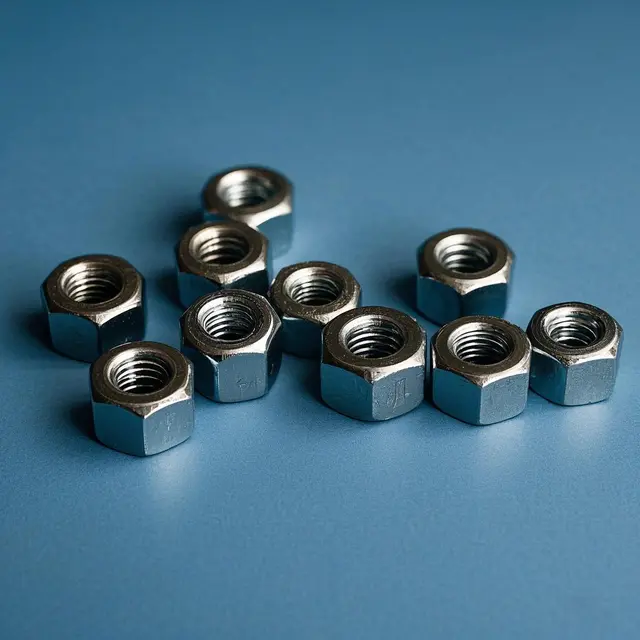
Model:Inconel 601 Product Brand:Chengxin
Inconel 601 Nuts / UNS N06601 / W.Nr. 2.4851 / NS3103 / ASTM B166, Suitable for High‑Temperature Service & Crevice Corrosion Resistance
Inconel 601 Nuts (UNS N06601, W.Nr. 2.4851, NS3103, ASTM B166) are premium fastener material featuring excellent oxidation resistance, thermal stability and mechanical strength. Its performance under high‑temperature, corrosive and thermal‑cycling environments makes it an essential choice for aerospace, chemical processing, heat‑treatment and power‑generation industries. Although more costly than standard alloys, its reliability and durability under extreme conditions justify its use in critical applications requiring long‑term performance and environmental stress resistance.
| Inconel 601 Nuts (UNS N06601 / W.Nr.2.4851 / ASTM B166) | ||
| Chemical Composition | Ni: 58‑63 | Cr: 21‑25 |
| Fe: Balance | Mn ≤1.5 | |
| Si ≤0.5 | C ≤0.10 | |
| Cu ≤1.0 | Al: 1‑1.7 | |
| Melting Point (°C) | 1320‑1370 | |
| Density (g/cm³) | 8.1 | |
| Applicable Standards | UNS N06601 | ASTM B166 |
| Application Fields | Heat‑treatment furnace trays & fixtures, high‑speed gas burners, woven wire belts for industrial furnaces, exhaust‑system components, combustion chambers for municipal solid‑waste incinerators, oxygen reheaters | |
Main Features of Inconel 601 / UNS N06601 / W.Nr.2.4851 / NS3103 / ASTM B166 Nuts:
Parameters:
- Category: Hex Nuts
- Product Grade: Grade A
- Property Class: Class 8
- Width Across Flats: 8‑120 (mm)
- Nut Height: 5.6‑60 (mm)
- Thread Size: M5‑M100
- Surface Finish: Plain (No Surface Treatment)
1. Chemical Composition (Typical Values)
| Element | Content (%) |
|---|---|
| Nickel (Ni) | ≥60.0 |
| Chromium (Cr) | 23.0‑27.0 |
| Aluminum (Al) | 1.0‑1.7 |
| Iron (Fe) | ≤10.0 |
| Carbon (C) | ≤0.10 |
| Manganese (Mn) | ≤1.0 |
| Silicon (Si) | ≤0.5 |
| Copper (Cu) | ≤0.5 |
| Sulphur (S) | ≤0.015 |
2. Core Characteristics
-
High‑Temperature Oxidation Resistance
- Forms dense Al₂O₃ oxide scale below 980°C with outstanding long‑term oxidation resistance.
- Short‑term service temperature up to 1200°C.
-
Corrosion Resistance
- Resists multiple corrosive media: seawater, nitric acid, organic acids, sulfur‑bearing environments.
- Superior stress‑corrosion‑cracking resistance compared with conventional stainless steels.
-
High‑Temperature Strength
- At 700°C, tensile strength ≥620 MPa, yield strength ≥275 MPa.
- High creep‑rupture strength, suitable for long‑term high‑temperature load‑bearing service.
-
Workability & Weldability
- Hot Working: Heat to 1150‑1230°C; avoid holding within the sensitive temperature range of 900‑1000°C.
- Cold Working: Cold drawing or cold rolling is feasible; solution treatment (1100‑1150°C) is required after cold deformation.
- Welding: TIG or MIG welding is recommended, using Inconel 601 or ENiCrMo‑3 filler wire.
3. Typical Mechanical Properties
| Property Index | Room‑Temperature Value | High‑Temperature Value (700°C) |
|---|---|---|
| Tensile Strength | ≥620 MPa | ≥620 MPa |
| 0.2% Offset Yield Strength | ≥275 MPa | ≥275 MPa |
| Elongation | ≥30% | ≥25% |
| Hardness (HB) | 140‑180 | ‑ |
| Melting Point | 1320‑1370°C | ‑ |
4. Application Fields
- Heat‑Treatment Industry
- Furnace rolls, muffle‑furnace linings, radiant tubes, thermowells.
- Energy & Power
- Gas‑turbine combustion‑chamber components, heat‑transfer tubes for nuclear‑steam generators.
- Aerospace
- High‑temperature structural parts for turbine engines, rocket‑propulsion nozzles.
- Chemical & Petrochemical
- High‑temperature reactors, distillation columns, acid‑regeneration equipment.
- Environmental‑Protection Equipment
- Incinerator components, waste‑gas‑treatment systems.
5. Standards & Certifications
- ASTM B166: Standard Specification for Nickel‑Chromium‑Alloy Bars and Rods.
- AMS 5668: Aerospace‑grade Inconel 601 bar material.
- EN 10095: European standard for high‑temperature alloys (NiCr23Al).
- Nuclear Compliance: Meets requirements of ASME BPVC Section III (Nuclear Pressure Vessels).
6. Processing & Service Precautions
- Hot Working
- Avoid holding at 900‑1000°C to prevent grain coarsening.
- Welding
- Pre‑heat thick‑wall sections to 150‑200°C; post‑weld heat treatment is not required.
- Surface Treatment
- Scale removal can be performed by sandblasting or chemical pickling.
- Environmental Compatibility
- Avoid contact with molten metals such as lead and zinc to prevent hot brittleness.
7. Advantage Comparison
| Material | Advantages | Limitations |
|---|---|---|
| Inconel 601 | Excellent high‑temperature oxidation & sulfidation resistance | Lower high‑temperature strength than Inconel 718 |
| Inconel 600 | Lower material cost | Slightly inferior oxidation resistance |
| Hastelloy C‑22 | Strong resistance to reducing‑acid corrosion | Insufficient high‑temperature strength |
8. Maintenance Recommendations
- Periodic Inspection: Inspect integrity of oxide scale after high‑temperature service.
- Cleaning & Maintenance: Avoid residual surface contaminants such as salts and acidic substances.
- Alternative Options: For cost‑sensitive projects, Incoloy 800H may be considered (good high‑temperature resistance with slightly poorer oxidation resistance).
9. Typical Application Cases
- Case 1: Inconel 601 furnace rolls applied in a steel‑mill heat‑treatment furnace achieved service life three times longer than 310S stainless‑steel counterparts.
- Case 2: Inconel 601 nut‑bolt connections adopted on an offshore drilling platform operated for 5 years without corrosion failure under hydrogen‑sulfide‑containing service conditions.