
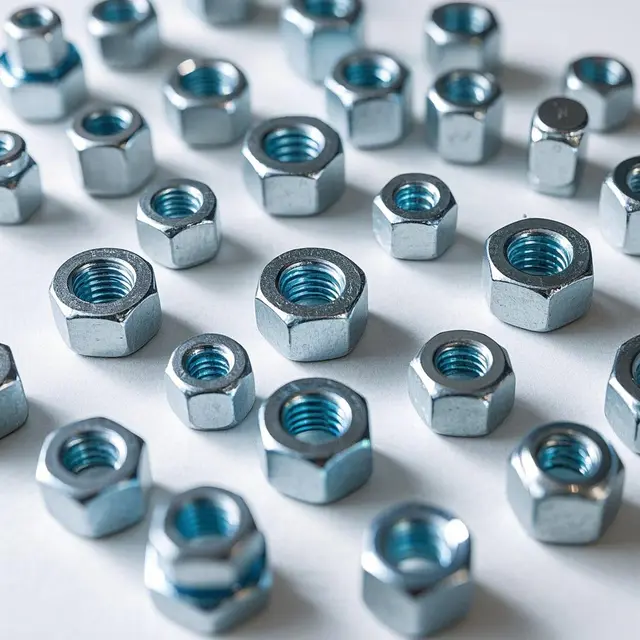
Model:Inconel 600 Product Brand:Chengxin
Inconel 600 Nut UNS N06600/NS312/NiCr15Fe/2.4816
| Inconel 600 (UNS N06600/NS312) | ||
| Chemical Composition | Ni ≥72 | Cr:14‑17 |
| Fe:6‑10 | Mn ≤1.0 | |
| Si ≤0.5 | C ≤0.15 | |
| Cu ≤0.5 | S ≤0.015 | |
| Melting Point (°C) | 1370‑1425 | |
| Density (g/cm³) | 8.4 | |
| Application Fields | Thermowells, vinyl chloride monomer production, production and handling of corrosive alkali metals, manufacturing of organic and inorganic chlorides and fluorides, nuclear reactors, retorts and components for heat‑treatment furnaces | |
Inconel 600 (UNS N06600) nuts are high‑performance fasteners manufactured from nickel‑chromium‑iron solid‑solution‑strengthened alloy. Featuring outstanding high‑temperature corrosion resistance, oxidation resistance and stress‑corrosion‑cracking resistance, they are widely used in harsh environments for nuclear, chemical and energy industries. Below are the key specifications:
Parameters:
- Category: Hex Nut
- Product Grade: Grade A
- Property Class: Class 8
- Width Across Flats: 8‑120
- Height: 5.6‑60(mm)
- Thread Size: M5‑M100
- Surface Treatment: As‑produced (no treatment)
Inconel 600 (UNS N06600) nuts are high‑performance fasteners manufactured from nickel‑chromium‑iron solid‑solution‑strengthened alloy. Featuring outstanding high‑temperature corrosion resistance, oxidation resistance and stress‑corrosion‑cracking resistance, they are widely used in harsh environments for nuclear, chemical and energy industries. Below are the key specifications:
1. Material Properties
- Typical Chemical Composition:
- Nickel (Ni) ≥72%, Chromium (Cr) 14‑17%, Iron (Fe) 6‑10%, Carbon (C) ≤0.15%, Manganese (Mn) ≤1.0%, Sulphur (S) ≤0.015%, Silicon (Si) ≤0.5%.
- Strengthening Mechanism: Solid‑solution strengthening. High nickel and chromium contents form a dense protective oxide film to improve corrosion and oxidation resistance.
- High‑temperature Performance: Continuous operating temperature up to 1090 °C; short‑term temperature resistance up to 1200 °C. Maintains high strength and creep resistance at elevated temperatures.
2. Core Advantages
- Corrosion Resistance
- Resistant to oxidizing acids (nitric acid, sulfuric acid), chlorides, seawater and sulfur‑bearing environments. Especially resistant to stress‑corrosion cracking (SCC), suitable for primary and secondary loops of nuclear reactors.
- High‑temperature Stability
- Retains high tensile strength (≥550 MPa) and fatigue resistance above 700 °C, suitable for long‑term load‑bearing service under high‑temperature conditions.
- Workability & Weldability
- Formable by hot forging and hot rolling. TIG or MIG welding is recommended with ENiCr‑3 filler wire. Post‑weld heat treatment is not required.
3. Application Areas
- Nuclear Industry: Nuts for reactor control‑rod drive mechanisms and nuclear‑fuel‑handling equipment.
- Chemical Industry: Nuts for nitric‑acid production equipment, vinyl‑chloride‑monomer reactors and uranium‑conversion‑unit flanges.
- Energy & Environmental Protection: Fixing nuts for flue‑gas‑desulfurization components in coal‑fired power plants and incinerator thermowells.
- Heat‑treatment Industry: Connecting nuts for high‑temperature furnace heating elements, radiant tubes and muffle‑furnace linings.
- Aerospace: Fastener nuts for turbine engine high‑temperature sealing components and combustion‑chamber parts.
4. Standards & Certifications
- International Standards:
- ASTM B166 (bar stock), ASTM F467 (nuts), ISO 4032 (hex nuts), DIN 934 (hex nuts).
- Certifications:
- PED (Pressure Equipment Directive), EN 10204 3.1/3.2 material test certificates, compliant with NACE MR0175 for sulfide‑stress‑cracking resistance.
5. Manufacturing Process
- Raw Material: Produced by Vacuum Induction Melting (VIM) + Electroslag Remelting (ESR) process to guarantee high purity and homogeneous microstructure.
- Forming Methods:
- Hot Forging: Heating temperature 1050‑1150 °C to avoid grain coarsening.
- Cold Working: Cold‑drawn or cold‑rolled products require solution annealing (1095‑1120 °C) to restore ductility.
- Surface Treatment: Optional zinc plating, nickel plating, PTFE coating and other treatments to enhance corrosion resistance and anti‑seizure performance.
6. Typical Room‑temperature Mechanical Properties
| Property Index | Typical Value |
|---|---|
| Tensile Strength | ≥550 MPa |
| 0.2% Offset Yield Strength | ≥240 MPa |
| Elongation | ≥30% |
| Hardness (HB) | 130‑170 |
7. Global Equivalent Grades
| Country / Region | Standard | Grade |
|---|---|---|
| USA | UNS | N06600 |
| Europe | EN/DIN | NiCr15Fe/2.4816 |
| China | GB/T 15007 | NS3102 |
| Japan | JIS G4902 | NCF600 |
8. Usage Notes
- Hot‑working Control: Avoid prolonged holding within the sensitive temperature range of 900‑1000 °C to prevent grain coarsening.
- Environmental Compatibility: Avoid contact with molten metals such as lead and zinc to prevent hot brittleness.
- Installation Torque: Pre‑tightening force must be precisely controlled to prevent cracking caused by stress concentration.
Summary
Benefiting from nickel‑chromium‑base alloy characteristics, Inconel 600 nuts deliver outstanding corrosion resistance and high‑temperature stability under extreme operating conditions. Rigorous manufacturing procedures and international certifications guarantee long‑term reliability for nuclear reactors, chemical equipment and energy‑sector applications, making them an ideal fastener choice for high‑temperature and heavily corrosive working conditions.